




Fungal nail infection in pharmacy practice: causes, progression, and risk assessment

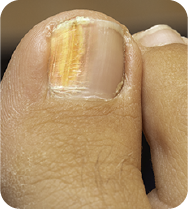
Onychomycosis is a fungal infection of the nail apparatus that typically develops gradually and progresses over time. It is commonly encountered in community pharmacy.

Understanding how infection develops and spreads supports accurate recognition, identification of contributing factors, and appropriate patient counselling1-3.

How fungal nail infection develops

Onychomycosis affects one or more parts of the nail unit, including the nail plate, nail bed, or nail matrix. Infection usually begins at the distal edge of the nail or through the lateral nail folds, often following minor trauma that disrupts the protective nail barrier.


Once established, fungal organisms proliferate within the keratin-rich nail structure. Because nail growth is slow, spontaneous clearance is limited, allowing the infection to persist and gradually progress 1-3.
Fungi involved in onychomycosis

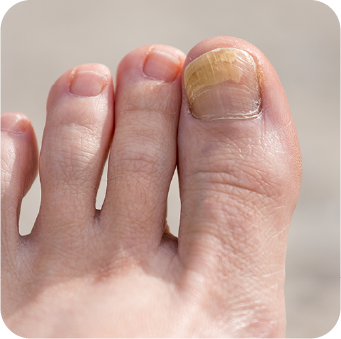
Several fungal organisms are implicated in onychomycosis 4, 5:

Clinical progression

As the infection advances, visible and structural nail changes become more pronounced. These may include:

In more advanced cases, secondary bacterial colonization may contribute to malodor, particularly when debris accumulates beneath the nail plate 3, 4.

Transmission and contributing factors

Fungi responsible for onychomycosis thrive in warm, moist, and enclosed environments. Transmission may occur through:

Patients at increased risks

Onychomycosis can affect healthy individuals; however, several factors increase susceptibility and persistence 3, 6:

Clinical red flag: diabetes

In people with diabetes, onychomycosis should not be regarded as a purely cosmetic condition. Nail thickening and infection may contribute to pressure points, skin breakdown, and secondary bacterial infection, thereby increasing the risk of diabetes-related foot complications
7-9
.

Referral for medical or podiatric assessment should be considered in patients with diabetes, peripheral vascular disease, immunosuppression, or when infection is extensive or progressive.


The pharmacist’s role

Pharmacists play a central role in recognizing characteristic nail changes, identifying contributing factors and high-risk patients, explaining the chronic and progressive nature of infection, and facilitating timely referral when appropriate.

Resources

Foot problems in pharmacy practice: the importance of early care

Article

What changes the risk profile of foot conditions?

Infographic

Diabetic foot care in pharmacy practice

Article

From balance to breakdown: The physiology of plantar skin

Infographic

Common Foot Care Myths Patients Believe

Article
  1. Leung, A.K., et al., Tinea pedis: an updated review. Drugs Context, 2023. 12.
  2. Nigam, P.K., H.A. Syed, and D. Saleh, Tinea Pedis, in StatPearls. 2025: Treasure Island (FL) ineligible companies. Disclosure: Hasnain Syed declares no relevant financial relationships with ineligible companies. Disclosure: Dahlia Saleh declares no relevant financial relationships with ineligible companies.
  3. Piraccini, B.M. and A. Alessandrini, Onychomycosis: A Review. J Fungi (Basel), 2015. 1(1): p. 30-43.
  4. Crawford, F. and S. Hollis, Topical treatments for fungal infections of the skin and nails of the foot. Cochrane Database Syst Rev, 2007. 2007(3): p. CD001434.
  5. Ward, H., et al., Consensus for the Treatment of Tinea Pedis: A Systematic Review of Randomised Controlled Trials. J Fungi (Basel), 2022. 8(4).
  6. Lipner, S.R. and R.K. Scher, Onychomycosis: Clinical overview and diagnosis. J Am Acad Dermatol, 2019. 80(4): p. 835-851.
  7. Schaper, N.C., et al., Practical guidelines on the prevention and management of diabetes-related foot disease (IWGDF 2023 update). Diabetes Metab Res Rev, 2024. 40(3): p. e3657.
  8. Senneville, E., et al., IWGDF/IDSA guidelines on the diagnosis and treatment of diabetes-related foot infections (IWGDF/IDSA 2023). Diabetes Metab Res Rev, 2024. 40(3): p. e3687.
  9. Srinivas-Shankar, U., A. Kimyaghalam, and R. Bergman, Diabetic Foot Ulceration and Complications, in StatPearls. 2025: Treasure Island (FL) relationships with ineligible companies. Disclosure: Ali Kimyaghalam declares no relevant financial relationships with ineligible companies. Disclosure: Rachel Bergman declares no relevant financial relationships with ineligible companies.

*** You need to be logged in to access this website ***

Continue advancing
your expertise in foot health

Log in to access professional resources, product education, and exclusive Pharmacists-only tools.

Please sign in :