




Biomechanics and Everyday Movement: Why Foot Support Matters in Pharmacy Practice
The human foot is built to absorb shock, adapt to the ground, and provide stability during movement. Even during normal walking, forces reaching about 1.2 times body weight pass through the foot with every step1.
On hard indoor floors and paved surfaces, these forces are repeated thousands of times a day, increasing overall mechanical stress.
How the foot adapts during walking
During walking, the foot briefly becomes flexible to absorb impact and adapt to the ground. This phase, often described as pronation, helps reduce shock as the body weight transfers onto the limb. As the step progresses, the foot gradually stiffens (supination), creating a stable lever for push-off2.
When this sequence is altered, because of foot structure, prolonged standing, footwear, or fatigue, pressure may be distributed unevenly across the plantar surface. Over time, this can increase strain in specific tissues3.
Common biomechanical patterns pharmacists encounter
In community pharmacy, patients often present with symptoms that can be influenced by mechanical factors:
- Excessive pronation may increase strain on soft tissues and alter lower-limb alignment during stance4.
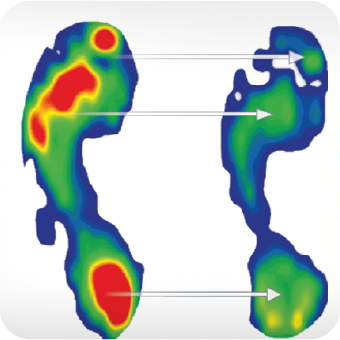
- Reduced shock absorption may increase pressure along the lateral side of the foot and allow greater impact forces to travel up the limb5.
- Localized pressure on specific areas of the sole may lead to discomfort and the development of hyperkeratotic lesions. Corns and calluses are commonly associated with repeated pressure and friction6.
These patterns do not represent specific diagnoses. Rather, they describe mechanical factors that may contribute to ongoing symptoms such as heel pain or recurrent callus.
How insoles support mechanical function
Insoles help the foot cope with the demands of everyday movement. By increasing contact with the sole, they spread pressure more evenly and reduce excessive load on specific areas. Arch support can enhance stability during standing and walking, while cushioning helps absorb impact with each step.
This combination can ease strain on structures such as the heel and forefoot and improve comfort during prolonged periods on the feet. As a simple, non-invasive measure, insoles provide additional mechanical support and can complement appropriate footwear and sensible load management (Scholl publication).
Integrating biomechanical understanding into routine consultations allows pharmacists to support informed self-care while recognizing when further assessment is needed.
Resources


- Lautzenheiser, S.G. and P. Ann Kramer, Muscle forces and the demands of turning while walking. Biol Open, 2025. 14(6).
- Behling, A.V., et al., Chasing footprints in time – reframing our understanding of human foot function in the context of current evidence and emerging insights. Biol Rev Camb Philos Soc, 2023. 98(6): p. 2136-2151.
- Mohammadi, M.M. and A. Nourani, Testing the effects of footwear on biomechanics of human body: A review. Heliyon, 2025. 11(4): p. e42870.
- Mei, Q., et al., Foot Pronation Contributes to Altered Lower Extremity Loading After Long Distance Running. Front Physiol, 2019. 10: p. 573.
- Cha, Y.J., Effectiveness of Shock-Absorbing Insole for High-Heeled Shoes on Gait: Randomized Controlled Trials. Healthcare (Basel), 2022. 10(10).
- Al Aboud, A.M. and S.N.S. Yarrarapu, Corns, in StatPearls. 2025: Treasure Island (FL) ineligible companies. Disclosure: Siva Naga Yarrarapu declares no relevant financial relationships with ineligible companies.