




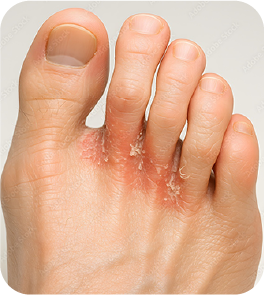
Athlete’s foot in pharmacy practice: recognition, risk, and referral
Athlete’s foot (tinea pedis) is a common fungal infection of the skin caused by dermatophytes. It frequently presents in community pharmacy and is easily transmitted in warm, moist environments such as communal showers and swimming pools 1, 2.
Although usually mild, early recognition and appropriate advice help reduce symptoms, limit spread, and lower the risk of recurrence 3, 4.
Is it athlete’s foot? Key signs at a glance
Athlete’s foot (tinea pedis) | |
Typical location | Between the toes, soles or sides of the feet |
Skin appearance | Peeling, scaling, maceration, or cracking |
Common symptoms | Itching, irritation, soreness |
Redness/inflammation | May be mild |
Moisture | Often worsened by damp or sweaty feet |
Course | May persist or recur without treatment |
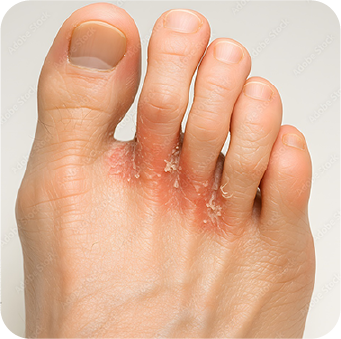
Recognising athlete’s foot
Patients with athlete’s foot may present with a range of symptoms, most commonly affecting the spaces between the toes 2, 3, 5.
Typical features include:
- Peeling, scaling, or macerated skin between the toes
- Itching or irritation, which may be intense
- Cracked, flaky, or sore skin, sometimes with mild redness or inflammation
Other forms may involve dry scaling on the soles or sides of the feet. Symptoms can vary in severity and may fluctuate over time.
Why early recognition matters
Although athlete’s foot is not usually serious, an untreated infection can persist and spread 1, 4.
Early treatment helps to:
- Reduce discomfort and itching
- Limit transmission to other areas of the foot, toenails, or hands
- Reduce the risk of spread to household members
- Lower the likelihood of recurrence
Spread from untreated athlete’s foot to the toenails is a recognised pathway for the development of onychomycosis.
How infection spreads
Dermatophytes thrive in warm, damp environments. Transmission may occur through
1, 3, 5:
- Barefoot exposure in communal areas such as pools, gyms, and changing rooms
- Shared towels, footwear, or contaminated surfaces
- Prolonged use of occlusive footwear that retains moisture
Reinfection is common if the environment that supports fungal growth is not addressed.
Red flags: Identifying patients who may need referral
Most cases of athlete’s foot can be managed in a pharmacy. However, referral to a general practitioner or podiatrist is appropriate when:
- Symptoms are severe, extensive, or painful
- There is no improvement after appropriate use of OTC antifungal treatment
- The infection involves the nails
- The patient has diabetes, peripheral vascular disease, reduced sensation, or is immunocompromised
These individuals are at higher risk of complications and require medical assessment.


The pharmacist’s role
Pharmacists play an important role in recognising the characteristic symptom pattern of plantar fasciitis, reassuring patients about the nature of the condition, and guiding them toward appropriate next steps, including conservative care and referral when needed.
Resources


- Crawford, F., Athlete’s foot. BMJ Clin Evid, 2009. 2009.
- Overview: Athlete’s foot. InformedHealth.org [Internet]. Cologne, Germany: Institute for Quality and Efficiency in Health Care (IQWiG); 2006-. . 2025.
- Leung, A.K., et al., Tinea pedis: an updated review. Drugs Context, 2023. 12.
- Ward, H., et al., Consensus for the Treatment of Tinea Pedis: A Systematic Review of Randomised Controlled Trials. J Fungi (Basel), 2022. 8(4).
- Nigam, P.K., H.A. Syed, and D. Saleh, Tinea Pedis, in StatPearls. 2025: Treasure Island (FL) ineligible companies. Disclosure: Hasnain Syed declares no relevant financial relationships with ineligible companies. Disclosure: Dahlia Saleh declares no relevant financial relationships with ineligible companies.